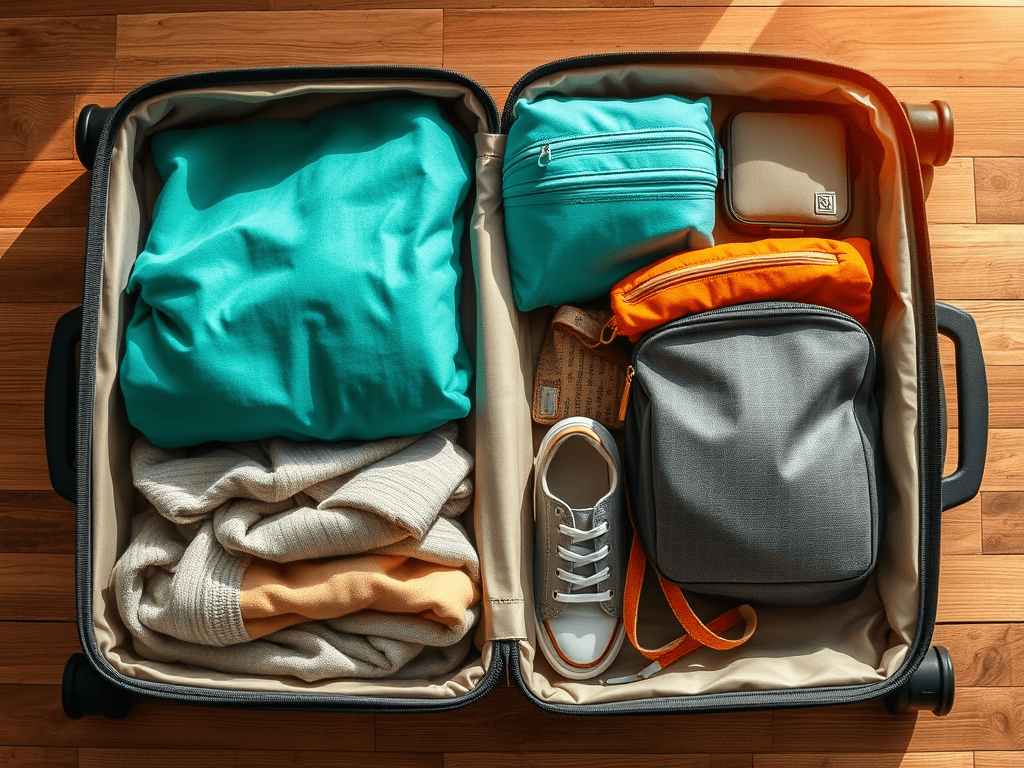
When I first travelled to Kerala, I assumed my usual Kerala travel packing list would be enough, but I was wrong.
Between Kerala’s humid weather, sudden rains, temple dress codes, backwaters, mosquito-heavy evenings, and long outdoor days, I quickly realised there were a few things I genuinely wished I had packed earlier.
So instead of repeating obvious basics like sunscreen and sunglasses, here are 9 practical Kerala travel essentials that most travellers overlook, but can make your trip far more comfortable.
If you are in the planning stage, this Kerala travel guide will solve all your questions about the trip.
- Weather & Climate Essentials.
- 1. A Lightweight cotton scarf (Essential for Kerala weather & temples)
- 2. Footwear that can get wet during travel and still be comfortable.
- 3. A small, foldable rain layer or umbrella for Kerala rain
- A reusable water bottle (Filtered water isn’t everywhere)
- 4. Portable fan
- 5. A light shawl or full-sleeve layer for evenings at backwaters
- 6. A Warm Layer (Non-Negotiable If You're Going to Munnar)
- On-the-Go Travel & Comfort
- H2: What to Pack for Kerala Based on When You're Travelling
- What to Wear in Kerala?
- Packing for different Kerala locations
- What NOT to Pack for Kerala
- Packing hacks for Kerala
- The last note
- Answers to your Queries
Weather & Climate Essentials.
1. A Lightweight cotton scarf (Essential for Kerala weather & temples)
A scarf was one of the first things I packed for Kerala.
This may sound insignificant or purely aesthetic, but trust me, a lightweight cotton or linen scarf is one of the most versatile things you can pack for Kerala.
It can come in handy in multiple ways:
- Covering your head, arms, or legs while entering temples or churches
- Protecting yourself from harsh sun while exploring temples in Varkala or the Kochi Museums.
- Acting as a light wrap during early-morning backwater rides
- And of course as a style accessory
Avoid synthetic fabrics at all costs. Kerala’s humidity does not forgive them. Cotton breathes, dries faster, and doesn’t trap sweat.
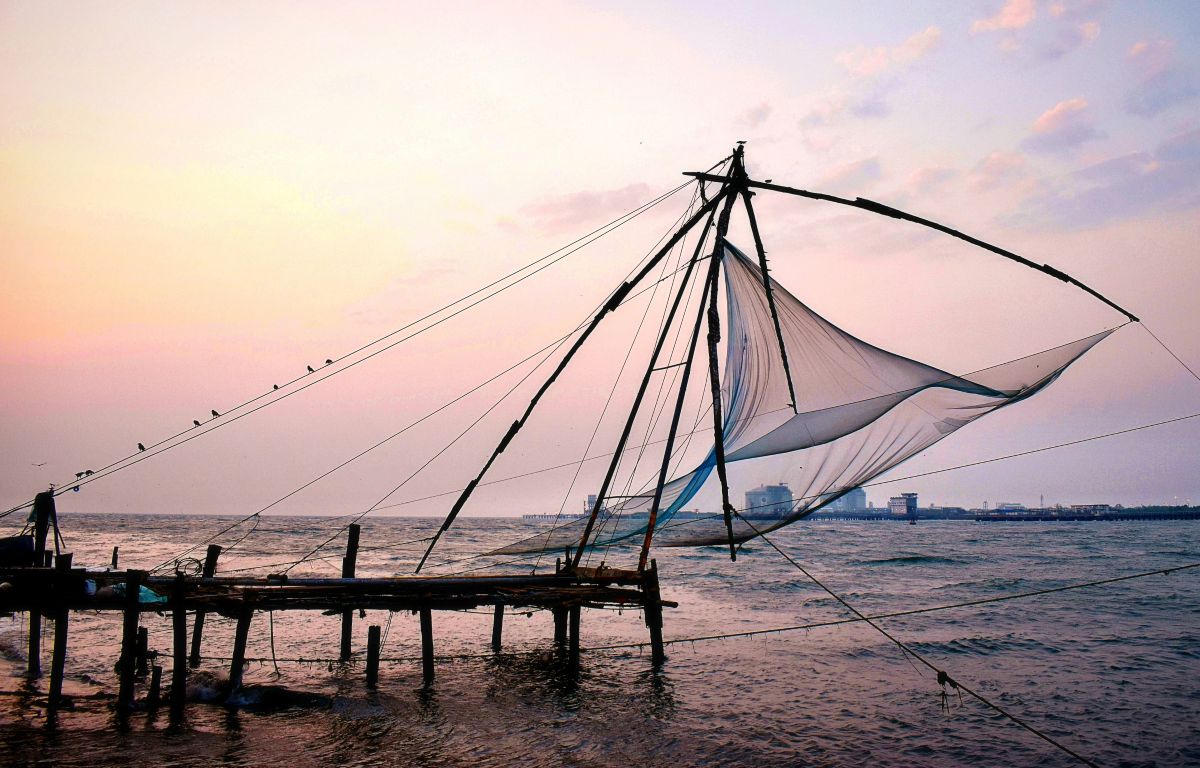
2. Footwear that can get wet during travel and still be comfortable.
When I visited Kerala in February, I wasn’t expecting warm weather that would tempt me into the water. I assumed winter meant sitting on the beach and watching sunsets from a distance.
But my newfound love for the sea and occasional showers spoiled my whole plan.
Which is why by the 1st night at Kochi, we had to go out scouting for a footwear pair that wouldn’t spoil in water, be it sea or rain.
For beaches, a cute pair of flip flops would be best. But in general, carrying rain footwear is a safe bet for a Kerala trip.
I bought a pair of clogs that were comfortable and stylish at the same time.
Avoid white sneakers (they will not survive emotionally) or slippers with zero grip.
3. A small, foldable rain layer or umbrella for Kerala rain
In Kerala, wet surfaces are part of daily life around beaches, temple steps, waterfalls, and homestay courtyards. Pack for function, not aesthetics.
Moreover, unexpected and offseason rains are a norm in Kerala.
Therefore, while visiting Kerala, you must carry a rain protectant, be it a strong foldable umbrella, a lightweight rain jacket, or a poncho that folds into itself.
Pro Tip: Carry all if you are visiting during monsoons. You will need them!
Irrespective of the weather, whenever you are travelling to Kerala, always carry a small foldable umbrella in your luggage.
A reusable water bottle (Filtered water isn’t everywhere)
Kerala looks lush and water-rich, but that doesn’t mean drinking water is always readily available.
Carrying a reusable bottle will be very helpful for you and the environment.
You can refill your water bottle while leaving your hotel, resorts, or homestay, or while you are exploring the cities.
If you’re sensitive, consider a bottle with a built-in filter.
4. Portable fan
If you are travelling to Kerala anytime between February and October, the temperature can be hot and the weather humid.
Even in the month of Feb, when it is supposed to be cooler in Kerala, we struggled with humidity and heat with red-flushed skin and constant sweating.
Add a portable fan to your Kerala packing list for outdoor cafes, while waiting in queues, or on the beach.
It would be best to buy a rechargeable fan that can be recharged from your phone battery.
A portable fan was incredibly useful for us while strolling along the Kochi fort promenade and the Varkala cliff.
5. A light shawl or full-sleeve layer for evenings at backwaters
While southern Kerala stays warm and humid, evenings near water bodies and in hill regions can turn cool.
Carry a light shawl, poncho, or lightweight jacket for evening boat rides, open verandahs, and mountains.
You can pair it with your style effortlessly: a shawl or poncho with a traditional outfit and denim jackets for a western look.

6. A Warm Layer (Non-Negotiable If You’re Going to Munnar)
If you’re travelling to Kerala for the first time, it’s most likely that you have Munnar on your Kerala itinerary. And if you do, you need at least one warm layer.
Munnar sits at around 1500 metres. While December and January nights can drop to 8–10°C, even October and February evenings feel sharply cool after the coastal warmth.
While our slow itinerary didn’t allow us to visit Kerala, a couple we met in Varkala told us that it was considerably cooler in Munnar.
Unless you are visiting in December or January, you would not need a heavy jacket.
Instead, a light fleece, a thick stole, or a zip-up hoodie is enough. It folds small, weighs almost nothing, and you’ll be glad you have it the moment you step out at dawn to catch the tea estate mist.
If you’re only doing coastal Kerala — Kochi, Alleppey, Varkala — you can skip this. But if Munnar is on your list, this is non-negotiable.
On-the-Go Travel & Comfort

7. Cash in small denominations
Like most of the Indian states, Kerala is digitally comfortable. You can use UPI to make payments.
However, it is still recommended to carry cash in small denominations.
Small shops, ferries, local buses, temple counters, street vendors, tea stalls, etc., often prefer cash.
It would be best to carry small notes & easy-change amounts. Denominations of 5, 10, 20, 50 & 100 rupees would work.
You can ask for currency exchange through your hotel’s counter or at the airport.
Before you leave your hotel, ask the manager about the reasonable rates for services and products so that you are not overcharged.
8. Anti-friction solutions (You will thank yourself)
This rarely makes it to travel blogs, but Kerala’s humidity can cause chafing, rashes, and irritation, especially during long walks.
Apart from breathable clothes, you must carry anti-chafing cream, medicated powder, and aloe-based soothing gel.
Or you can also simply use petroleum jelly or coconut oil to soothe your irritated skin.
If you are travelling during monsoons or are not used to humid climates, avoid wearing denim shorts or dresses and opt for loose-fitting shirts, trousers, and skirts to prevent chafing and irritation.
9. A power bank
Most places in Kerala have reliable electricity, but power points are not always conveniently placed.
Carry a lightweight, airline-safe power bank to ensure your phone survives long ferry rides, navigation, photography, and that one last episode on the go.
10. Mosquito Repellent
I was visibly irritated by the nasty mosquito bites during the evening backwater ride.
It is because, by the time the sun goes down in Kerala, the mosquitoes are already out and unbothered.
Always carry a DEET-based repellent and apply it before you step out for evening walks or backwater cruises.
11. Ziplock Bag
Protecting your electronics and essentials when you are on the beach can be a real struggle. Either you can stay with them on the shore or go out in the water.
A ziplock bag lets you frolic in the water without worrying about the essentials.
Ziplock is a must-have essential when you are travelling to Kerala in the monsoon.
12. First Aid & Medications
I am sure you would carry your daily medicines. In this case, this point would be redundant.
However, we are talking about Kerala, which has its separate medical needs as well.
Pack electrolytes with you.
Kerala heat can dehydrate you faster than you expect, especially if you’re walking a lot or on a houseboat in summer.
- Electrolyte tablets or powder help you rehydrate faster and on the go, ensuring you do not fall sick while travelling.
- If travelling to Munnar, add motion sickness tablets — those winding ghat roads catch a lot of people off guard.
- Also carry an antiseptic, basic meds for upset stomach ( South Indian food can be heavy).
Buy Flavoured electrolytes, and you wouldn’t need soft drinks to refresh yourself.
H2: What to Pack for Kerala Based on When You’re Travelling
Kerala doesn’t have one climate. It has three very different weather conditions, depending on when you visit. Naturally, you would need a different packing list each time.
Peak Season (October to February)
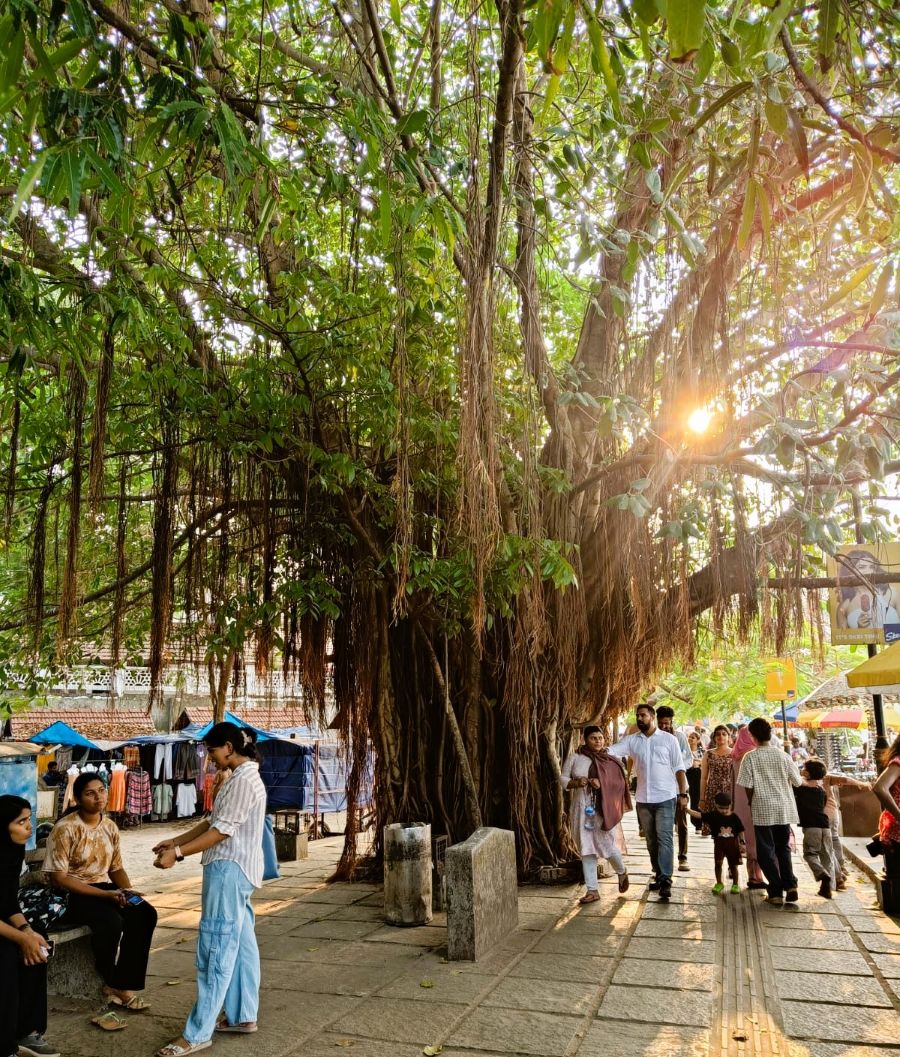
Sunrays filtering through a tree in Fort KochiThis is the most forgiving time to visit Kerala. Days are warm and sunny, evenings are pleasant, and rain is minimal. But you still need to be prepared if it showers.
- Carry a compact foldable umbrella regardless. Even if it doesn’t shower, you can use it while exploring on foot under harsh sunrays.
- Munnar nights get genuinely cold, especially in December and January. If your itinerary includes even one night in Munnar, pack a light fleece or a warm layer you can pull out of your bag.
You won’t need it in Kochi or Alleppey, but you will absolutely need it at 1500 metres above sea level.
I also carried a face mist for coastal areas for respite against humidity.
Monsoon Season (June to September)
If you’re visiting during the monsoon, everything is about staying dry and staying comfortable in the humidity that hovers around 90%.
Of course, you would need the obvious stuff — rain jacket, umbrella, waterproof bag cover.
But here is what you could miss: appropriate footwear.
Closed shoes stay wet for days in Kerala’s monsoon humidity. Pack quick-dry sandals or waterproof clogs as your primary footwear, and accept that they will get soaked.
Also pack: a dry bag or a large ziplock for your phone and documents, and cotton clothes (they dry faster than synthetics).
Also carry a light full-sleeve t-shirt for mosquito-heavy evenings.
Summer (March to May)
I travelled in late February when summer had already arrived in Kerala.
It was hot, humid, and exhausting. However, it was not as crowded as I had expected.
The beaches are emptier, and the light is spectacular in the early morning.
But you need to be prepared for the heat between 11 am and 4 pm, and the preparation is avoiding strolling in the sun.
My packing priority for my Kerala travel was breathability over everything. This is my packing list:
- A lot of loose cotton & linen in light colours,
- a cotton scarf to drape over your head and shoulders when outdoors
- A reusable water bottle
- Rechargable Portable fan
- Face Mist Sprayer
- Electrolyte powder
- A wide-brimmed hat
- Strong mineral sunscreen
From a traveller, these are the must-haves for travelling to Kerala in summer.
What to Wear in Kerala?
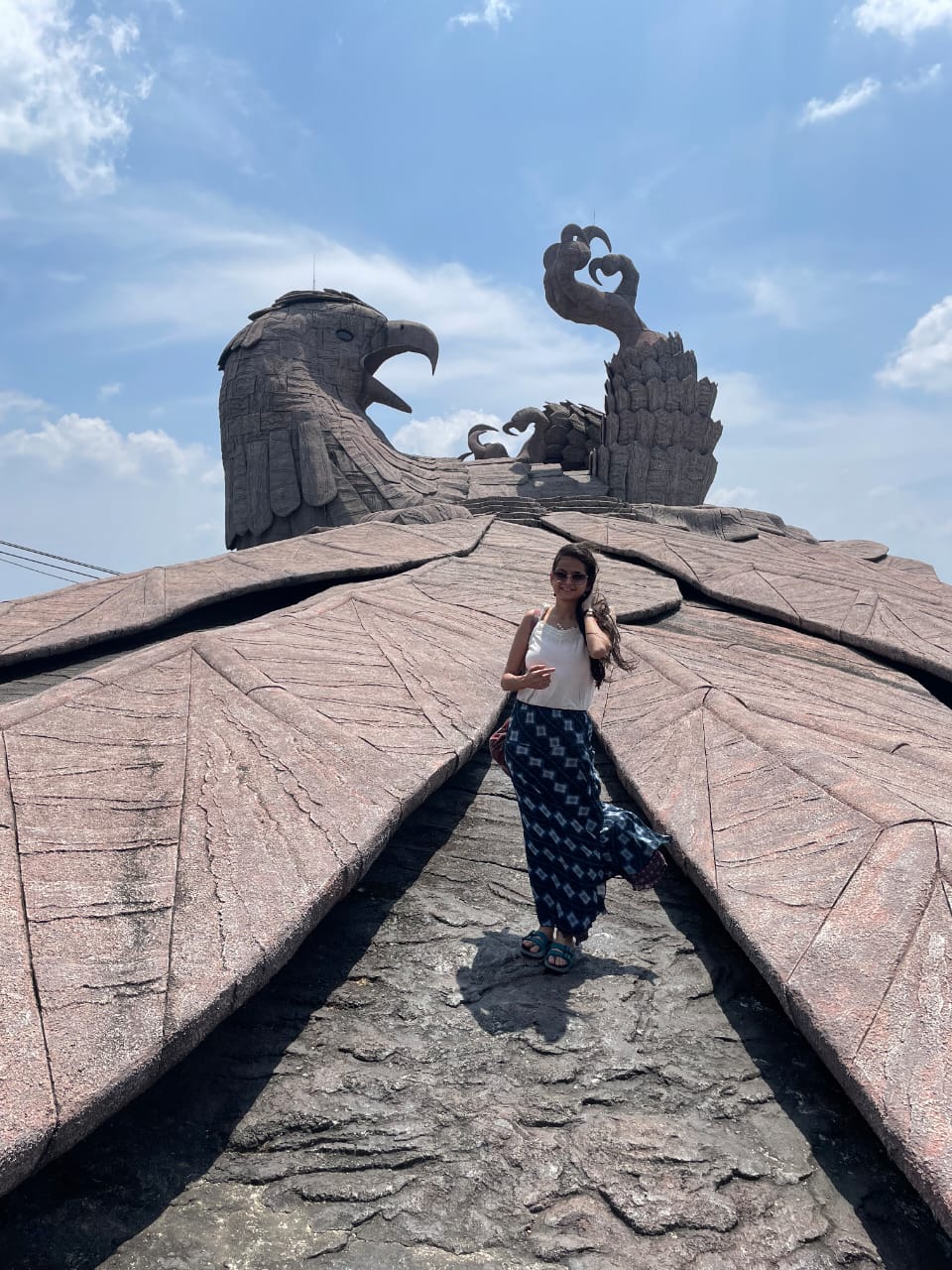
Kerala has a humid climate, which is why you only need breathable fabrics.
Pack linen and cotton clothes — they breathe, they dry fast, and they don’t stick to you while walking.
Avoid synthetic clothes entirely.
I carried the following clothes with me: –
- A few pairs of tops and loose linen trousers.
- Cotton Skirts for temples (Kerala’s traditional outfit includes a blouse and skirt)
- Cargo cotton half pants for beaches and markets
- 2-3 dresses
- A fleece Jacket for Munnar
For temples
To visit temples in Kerala, you would need modest clothing.
Many temples do not allow bare legs and arms. Pack accordingly.
Packing for different Kerala locations
Coast (Kochi, Varkala, Alleppey, Mararikulam):
For coastal areas, pack :
- Light clothes,
- flip flops, and
- a compact umbrella.
Beaches here are conservative; cover up outside your hotel pool. Avoid wearing swimsuits.
Backwaters (Munroe Island, Alleppey):
During a backwater ride, you’re on open water for hours with zero shade, save for scanty mangrove canopies. Pack:
- SPF,
- A full-sleeve layer to prevent mosquito bites,
- Mosquito Spray
- A dry bag/ Ziplock for your phone.
Munnar/Hills:
Evenings get genuinely cold, especially in December and January. Pack:
- One warm layer
- Shawls
- Beanie cap (For winters)
- Shoes with a good grip
What NOT to Pack for Kerala
Packing for Kerala is a little different from other destinations. Here are a few items you can skip to avoid overpacking:
- White sneakers: they won’t survive the dirt.
- Heavy denim and formal clothes: You would be better without them in the heat.
- Expensive jewellery: Kerala’s beach towns can have petty theft in tourist areas.
- Synthetic fabrics: They might look cool, but they will not be comfortable.
Packing hacks for Kerala
A few things to note while you pack for Kerala:
- Leave deliberate space in your luggage for some shopping. Be it clothes from Varkala or traditional masks from Kochi.
- Do not forget to buy spices, coir products, and banana & jackfruit chips from Kerala.
- Use packing cubes to separate wet and dry clothes, especially in the monsoon.
I had great fun while travelling around India, but more than that, these essentials helped me travel comfortably in Varkala, Kochi
If you’re planning a Kerala trip and want help deciding where to stay, how long to slow down, or which experiences actually matter, you can read my best places to visit in Kerala.
Refer to the separate packing guide if you need a rundown on a comprehensive packing list for all your trips.
(Also read: 5 reasons you must visit Kerala )
The last note
You could find many blogs with tips to roam around Kerala, but maybe not this one -Kerala moves at its own pace, and so should you.
Meals could take time (as they did for us in Mararikulam (read my full guide here)), the weather could shift, and plans could get changed for good.
So, packing emotional flexibility is as important as packing clothes.
Once you come to Kerala, you need to slow down and let nature take its course.
Notice the small things, the picturesque scenery in the tea gardens, the smell of wet earth, and the way life slows down while you are gliding above water.
Answers to your Queries
What clothes should I pack for a Kerala trip?
Kerala’s climate is tropical, hot, and humid almost year-round. Pack light, breathable cotton or linen clothes that dry quickly and let your skin breathe. Loose trousers, airy tops, skirts, or kurtas work well. For temple visits, modest attire that covers shoulders and knees is appreciated.
Do I need rain gear for Kerala, and what kind?
Yes—even outside monsoon season, Kerala sees unexpected showers. A compact, foldable rain jacket or poncho and a sturdy travel umbrella are smart additions to your packing list, especially if you’re visiting between June and September.
Is mosquito repellent necessary in Kerala?
Absolutely. Mosquitoes are common around backwaters, rural areas, and humid spots, and repellent helps you avoid bites and discomfort. Many guides also recommend carrying it even if your accommodation provides nets.
How much cash should I carry, and will cards work?
While major cities and tourist spots accept cards and UPI, small vendors, ferries, tea stalls, and local buses often prefer cash, especially small denominations. It’s best to carry some easy-change notes.
What else should I consider packing besides clothes?
Aside from clothing, pack the following:
- Basic first-aid and medications — pharmacies are common, but travelling prepared makes trips smoother.
These items make daily life easier in Kerala’s varied landscapes. - Reusable water bottle — filtered water isn’t always easy to find.
- Power bank — outlets aren’t always nearby.
Discover more from The Hopping Tales Journal
Subscribe to get the latest posts sent to your email.
thanks